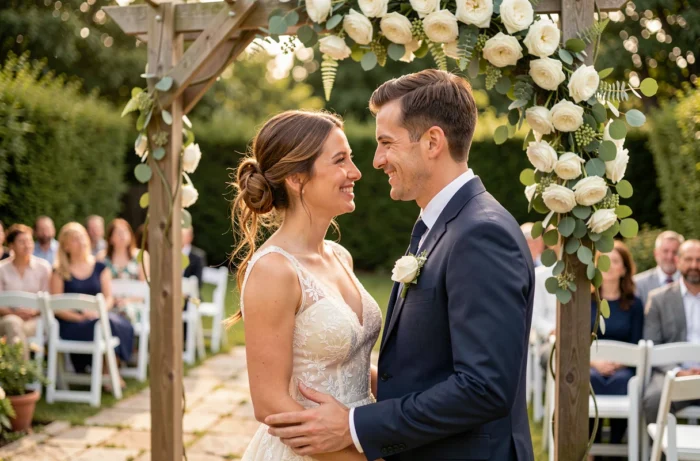
A wedding typically involves around ten service providers, a five-figure budget, and several months of preparation. The number of weddings celebrated in France has reached its highest level in over twenty years, with approximately 247,000 to 251,000 unions between 2024 and 2025.
The average age at marriage is also increasing: around 37.5 years for women and nearly 40 years for men. These couples marry after several years of living together, sometimes after having children, which profoundly changes their expectations for the big day.
Wedding budget breakdown: the key expenses
Before choosing a venue or caterer, the first step is to define a realistic overall budget. The common reflex is to list desires and then estimate costs afterward, which almost always leads to overspending.
The reverse method works better: set a total ceiling, then allocate by category. The reception venue and caterer usually take up the largest portion of the budget. Next come floral decoration, the couple’s attire, the photographer, and musical entertainment.
A often underestimated point: additional costs represent a significant part of the total. Guest accommodation, shuttles, tips, dress alterations, and municipal or place of worship fees. Allowing for a safety margin of at least ten percent on the initial budget avoids painful trade-offs in the final weeks.
To refine the choice of service providers and compare offers, platforms like Tomy Mariage allow for centralized searches and quick visualization of available options based on region and desired style.
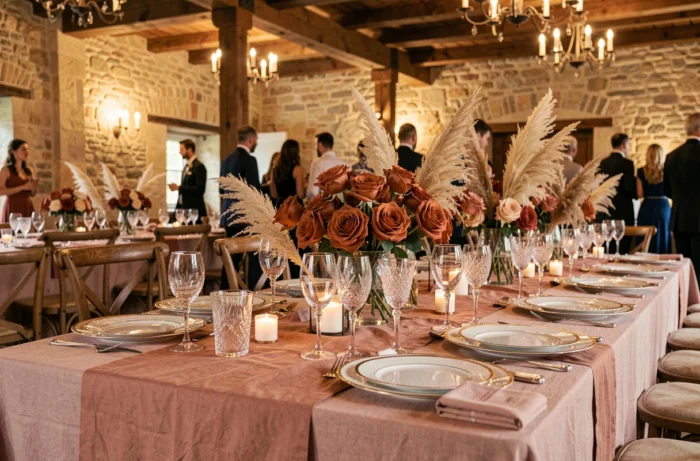
Reception venue and guest count: the duo that structures everything
The choice of reception venue directly depends on the guest list, not the other way around. A venue designed for 150 people will not create the same atmosphere with 60 guests. The venue’s capacity must match the actual number of guests, not a theoretical figure.
Three technical criteria should be checked before signing:
- The seating capacity for meals and standing capacity for cocktails, as these numbers often differ significantly.
- The time and noise constraints imposed by the municipality or neighbors, which can limit the duration of the dance party.
- Accessibility for guests (transport, parking, nearby accommodation), a factor that directly influences attendance rates.
The style of the venue also guides decoration and dress code. A castle calls for a formal register, while a riverside guinguette allows for more relaxation. Choosing a venue that aligns with the couple’s lifestyle avoids imposing an artificial decor.
Seasonality and availability
The most sought-after venues are often booked twelve to eighteen months in advance for a wedding during the high season (May to September). A weekday or off-season wedding can reduce venue costs and offer more availability with service providers.
Civil or religious ceremony: a choice that shapes the proceedings
The civil ceremony remains mandatory for the marriage to be legally recognized. Beyond this formality, the couple chooses between a religious ceremony, a civil ceremony, or both in succession.
The civil ceremony has gained popularity in recent years. It takes place at the reception venue, outdoors, or in a dedicated room, and allows for total personalization: texts read by loved ones, symbolic rituals, freely chosen music. The officiant can be a friend, a family member, or a specialized professional.
This format requires specific preparation. Unlike a religious ceremony with a codified liturgy, the civil ceremony requires writing a detailed script, minute by minute: entrance of the couple, speeches, exchange of vows, exit. Without this prior work, the risk is a vague sequence that loses the guests’ attention.

Day-of coordination: what makes the difference between enjoyment and stress
On the wedding day, the couple should not manage logistics. The role of coordinator, whether entrusted to a professional wedding planner or a trusted person from their circle, covers specific tasks:
- Welcoming and directing service providers upon their arrival at the venue.
- Managing the timing between the ceremony, cocktail, meal, and first dance.
- Resolving unforeseen issues (caterer delays, unfavorable weather for an outdoor cocktail, faulty sound equipment).
- Serving as a single point of contact for all logistical questions from guests.
Delegating coordination transforms the couple’s experience. Without this delegation, the newlyweds spend part of their day answering practical questions instead of enjoying their guests.
The countdown in the final weeks
The four weeks leading up to the wedding focus on final confirmations: exact number of guests for the caterer, seating plan, follow-ups with guests who haven’t responded, final fitting of outfits. Compiling all this information into a single document, shared with the coordinator, significantly reduces the risk of forgetting.
The average wedding in France involves months of work for just a few hours of celebration. Couples who invest time in the logistical structure rather than decorative details consistently report a better experience on the big day. The venue, budget, ceremony format, and coordination form a solid foundation. The rest, such as flowers, favors, and the playlist, naturally adjusts when this foundation is strong.