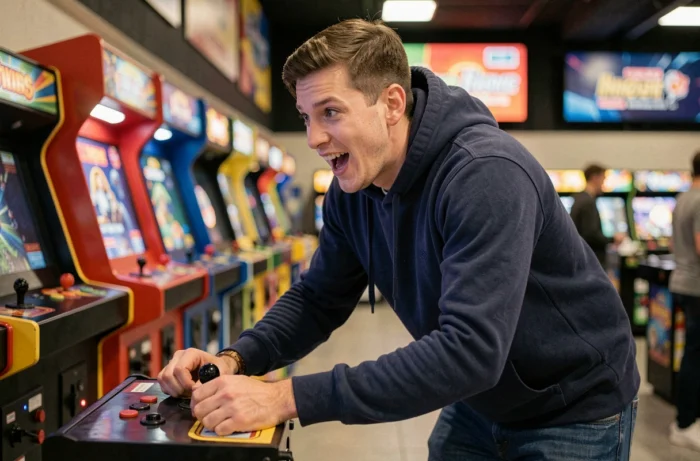
In an arcade, it’s easy to spot which machines are sitting idle and which have a constant queue. The difference rarely comes down to chance: it’s about refreshing the game lineup, choosing the right formats and creating an experience people can’t get at home.
The arcades drawing crowds in 2026 are the ones that understand that equipment ages faster than the walls around it.
Arcade machine operating costs: what really weighs on venues
Before discussing new releases, it’s worth looking at what holds back their adoption. An entertainment venue operator doesn’t choose a machine just because it’s making waves at a trade show. The purchase price is only part of the equation.
Rising fixed costs are having a direct impact on French arcades. An industry analysis published by Vertige Media in November 2026 reported a decline in ancillary revenue (food and drink, shops, team building) across the indoor leisure sector in 2025. The direct consequence: every new machine needs to deliver a faster return on investment than it did a few years ago.
Keeping up with Joker Amusement’s latest releases, we can see distributors highlighting high-throughput machines that can run short games while generating a high average spend per play. Even spectacular games with long sessions can create a throughput problem in busy venues.
- The energy consumed by VR machines (headsets, graphics processors, ventilation) adds to the bill compared with a standard arcade machine
- Maintaining immersive peripherals (guns, force-feedback steering wheels, motion seats) requires specialist parts and trained technicians
- Local competition between entertainment venues pushes operators to refresh their offering more often, shortening the payback period for each machine
VR machines and rail shooters: arcade games that draw the crowds
The format gaining ground in French arcades is the VR rail shooter. Players put on a headset, pick up a gun and follow a scripted course through the game. There’s no need to master a complex controller: VR rail shooters make arcade gaming accessible to everyone, from casual players to enthusiasts.
Godzilla Kaiju Wars VR, developed by Raw Thrills, is a good example of this trend. Players face giant kaiju with heavy weapons in a detailed graphical environment. Raw Thrills already produces MotoGP VR and King Kong interactive experiences, showing a clear shift by the manufacturer towards full immersion.
Drakons: Realm Keepers takes a similar approach with a rail shooter played on dragonback. Its gameplay is reminiscent of Panzer Dragoon, reimagined in an arcade format designed for sessions lasting just a few minutes. These machines take up more floor space than a standard cabinet, requiring operators to rethink their layouts.
Racing games and motion simulators
Driving simulators remain a mainstay of arcades. Asphalt Moto Blitz DX and Storm Rider 2 represent the new generation of racing machines, with articulated chassis that move in response to the player’s trajectory. The seat’s physical movement creates a sensation that a screen alone can’t reproduce, and that’s precisely what makes a trip to the arcade worthwhile compared with playing at home.
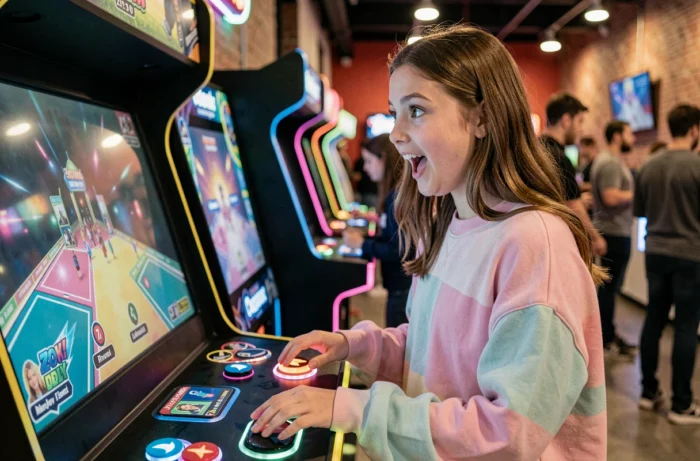
Hyper Cross, an arcade motocross game, focuses on local competition with simultaneous races. Two machines side by side, two players glancing at each other between turns: this social element remains the main driver of footfall.
Digital accessibility and online booking: an overlooked issue for entertainment venues
Entertainment venue operators focus on choosing machines, but the visitor’s digital journey has become an issue in its own right. Since June 28, 2025, the European Accessibility Act has applied to certain digital products and services for consumers, including online commerce.
For venues that offer online bookings or ticket sales, website accessibility is no longer optional but a regulatory requirement that must be checked based on the service in question.
Online bookings and advance sales also help operators forecast demand more accurately. Knowing how many visitors are arriving and when affects staffing, machine availability and even tournament scheduling.
Arcades in France: what sets long-lasting venues apart
Arcades can be found in Paris and across the rest of France, but they don’t all operate on the same model. Entertainment complexes such as Nikito and Pathé Games combine arcades with bowling, go-karting and laser tag. This variety appeals to families, but can sometimes dilute the arcade identity in favour of a more general offering.
Specialist venues such as La Tête dans les Nuages in Paris focus on a high density of machines and a retro gaming atmosphere. They attract a different crowd: players who come specifically for the arcade, not for an all-in-one entertainment package.
- Multi-activity complexes attract families but need to refresh every area (arcade, bowling, escape room) to keep visitors interested
- Specialist arcades build loyalty among enthusiasts, who are often willing to pay more per session, but their catchment area is smaller
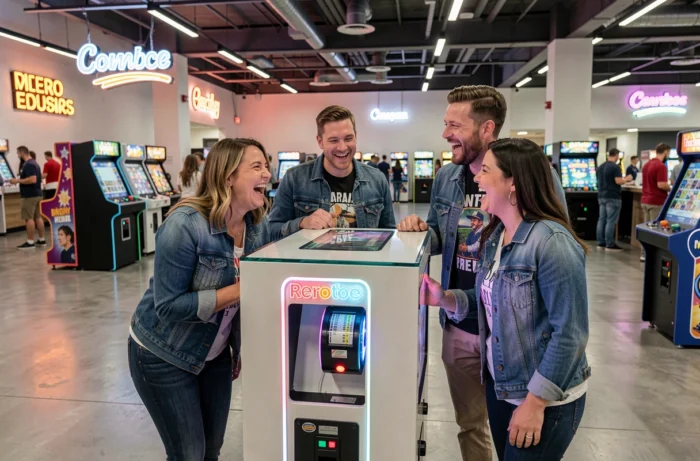
- Arcade bars (Coin Op Table, Meltdown, Reset) attract adults in the evening with a low entry fee, making up the difference through food and drink sales
The return of dedicated fighting game cabinets
Street Fighter 6 Type Arcade has renewed interest in fighting game cabinets at arcades. The game has an active competitive community, and venues that host regular sessions are seeing stronger customer loyalty. A weekly tournament on a dedicated cabinet creates a local community that online play can’t replace.
The arcades that last are those that combine regular machine upgrades, tight control of operating costs and an accessible digital presence. New machines draw a crowd with their spectacle, but it’s the consistency of the experience that brings people back.