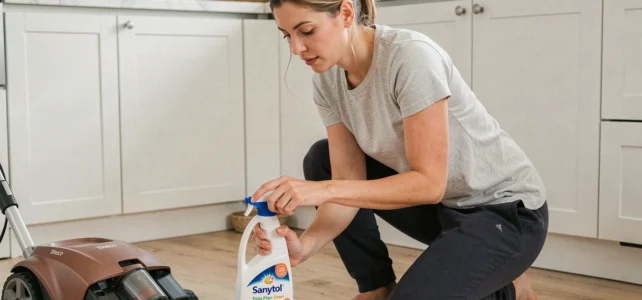
The Sanytol floor foam is a disinfectant product designed for direct application on hard surfaces. Introducing it into the tank of a Tineco floor washer presents a specific technical issue, related to the very nature of its foaming formulation and the constraints of the hydraulic circuit of these devices.
Foaming Surfactants and Tineco Hydraulic Circuit: A Mechanical Incompatibility
The Sanytol floor foam range relies on surfactants that generate a dense foam when in contact with moving water. In a bucket or a manual sprayer, this property facilitates the product’s adhesion to the floor. In a Tineco floor washer, the mechanism is radically different.
The clean water tank feeds a peristaltic or diaphragm pump that delivers a calibrated flow to the brush roller. The foam disrupts the operation of this pump by creating air pockets in the circuit. The result: an irregular flow, compromised suction, and a risk of foam rising towards the suction motor.
We regularly observe, in user feedback on specialized groups, that iWet sensors (dirt level detection) become inoperative after a few uses with foaming products. These sensors work by measuring the turbidity of dirty water. Water laden with surfactants skews the reading and triggers inappropriate rinsing cycles.
To understand how Sanytol floor foam interacts with the internal components of a Tineco, it is necessary to distinguish the foam version from the classic liquid version, as the technical implications differ.
Tineco Manufacturer Warranty and Third-Party Products: What Recent Manuals Say
Tineco has tightened its position on unofficial detergents in the manuals provided with models released since 2024. The mention is explicit: any third-party solution used in the tank may justify a refusal of warranty service. This wording covers Sanytol floor foam, even when heavily diluted.
The nuance is often misunderstood. On forums, a reduced dosage (half a cap per tank) is presented as a compromise solution. In reality, the warranty clause does not mention any concentration threshold. The use of a product not referenced by Tineco is sufficient for the manufacturer to decline the warranty.
Particular Case of Hybrid Steam Models
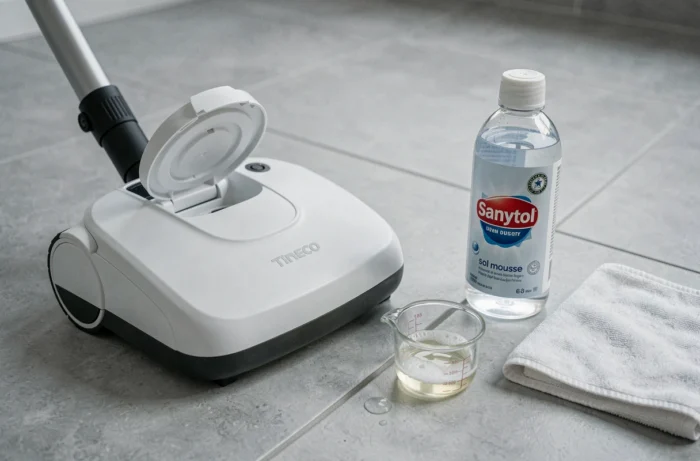
For the Tineco FLOOR ONE S7 Stretch Steam and equivalents, the constraint is even stricter. The manual specifies that the clean water tank must contain only demineralized water in steam mode. No cleaning solution, whether official or not, should pass through the steam circuit.
Introducing Sanytol floor foam into a hybrid device amounts to sending surfactants into a steam generator. Residues accumulate on the heating element and in the ducts, which reduces the lifespan of the heating system.
Alternatives Compatible with Tineco Floor Washers
The Tineco multi-surface cleaning solution (Deodorizing & Cleaning Solution) remains the only detergent approved by the manufacturer. Its formulation is calibrated to produce an almost zero foam level, compatible with Tineco pump flow rates.
For users seeking a disinfecting action comparable to Sanytol, we recommend separating the two steps:
- Regular cleaning with the official Tineco detergent or clear water in the floor washer
- Spot disinfection with Sanytol floor foam applied manually to the floor (spray or mop), after using the floor washer
- Rinsing the floor with clear water with a second pass of the floor washer if necessary
This two-step approach preserves the integrity of the hydraulic circuit while ensuring the desired disinfection. It adds a few minutes to the process but avoids cumulative damage to seals, sensors, and pumps.
Low Foam Generic Detergents: Selection Criteria for Tineco
Some generic detergents sold on Amazon or at drugstores are labeled “compatible with floor washers.” Not all are equal. Here are the technical criteria to check before introducing a product into the tank:
- “Low foam” or “basse mousse” mention on the packaging, which automatically excludes any product from the Sanytol floor foam range
- Absence of bleach, chlorinated solvents, and abrasive particles in suspension
- Neutral or slightly alkaline pH (between 7 and 9), compatible with the silicone seals of the circuit
- Concentration of surfactants below the threshold indicated by the floor washer manufacturer
Products based on black soap, pure white vinegar, or concentrated essential oils are also discouraged. Black soap leaves a greasy film on the roller. White vinegar eventually damages seals. Essential oils can dissolve certain technical plastics.
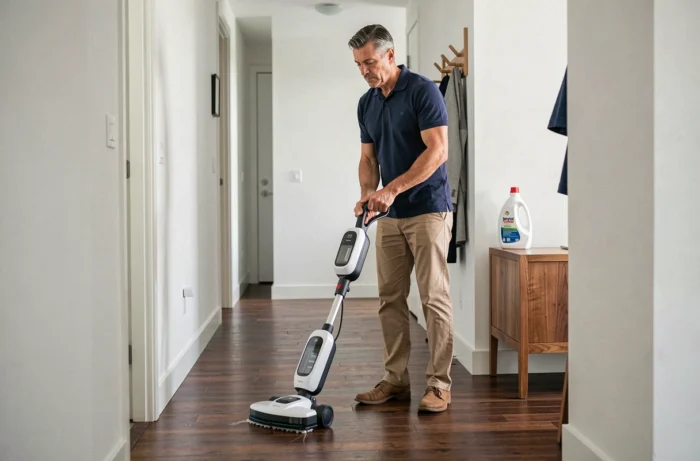
Sanytol floor foam was not formulated to pass through a low-volume pressurized circuit. Its disinfecting effectiveness, real on a manually treated surface, becomes a mechanical risk factor in a Tineco floor washer. Separating mechanized cleaning from manual disinfection remains the only method that protects both the device and the manufacturer’s warranty.