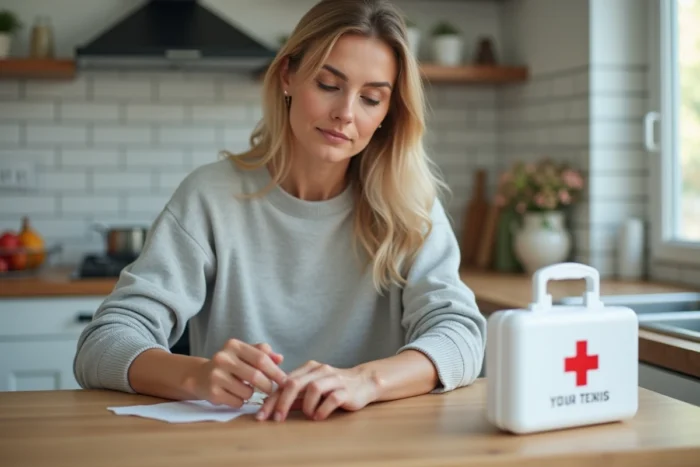
A torn nail exposes the nail bed, a richly innervated area sensitive to the slightest friction. Complete healing takes several months, during which every daily action (washing, putting on shoes, sleeping) requires adjustment. Protecting this exposed surface from moisture, pressure, and infections is the guiding principle throughout the regrowth period.
The role of the remaining nail as a biological dressing
When the nail is only partially torn, the reflex to remove it to “clean it up” worsens the situation. This adhering fragment acts as a natural biological dressing: it covers the matrix and the nail bed, limits direct contact with the outside, and reduces pain.
Keeping it in place as long as it remains attached protects the cells responsible for regrowth. A sterile dressing placed over it is sufficient to stabilize it. Removal is only justified if the fragment moves to the point of causing mechanical irritation, or if a healthcare professional recommends it after examination.
Daily care applied to the torn nail bed on Cydlab outlines the steps to clean, dry, and dress the area without compromising this natural shield.
Drying and maceration: daily vigilance after a torn nail
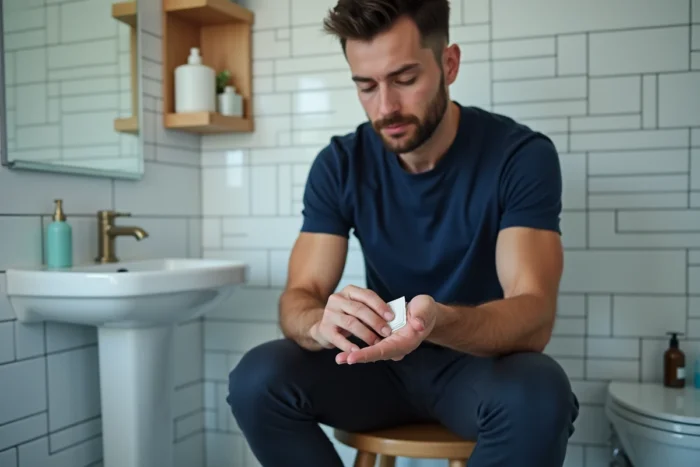
Prolonged moisture is the main factor for local complications. Skin that is constantly moist under an occlusive dressing softens, promotes bacterial proliferation, and slows healing. The care protocol is based on a simple principle: every cleaning must be followed by complete drying.
How to shower without compromising healing
Wrapping the finger or toe in a waterproof finger cot or a plastic bag secured with a rubber band limits water infiltration. If water comes into contact with the wound, gently dab with a sterile compress, without rubbing. Air drying for a few minutes before applying a clean dressing prevents trapping residual moisture.
Changing the dressing at the right pace
A soiled or wet dressing loses its protective function. Renewing it once a day under normal conditions, and systematically after any contact with water, maintains an environment conducive to regrowth. Using a non-adherent compress in direct contact with the nail bed prevents tearing of the forming tissues during removal.
Shoes and frontal pressure: adapting your equipment during regrowth
For a torn toenail, the choice of shoes directly affects the level of pain and the speed of healing. Loose or open shoes reduce frontal pressure on the affected area, which limits repeated micro-traumas with each step.
Models with a rigid toe (safety shoes, pointed heels, narrow sneakers) compress the toe and risk dislodging a fragment of nail still in place. Throughout the healing phase, opting for open-toed sandals or soft shoes with a wide toe radically changes comfort.
- Avoid tight socks or synthetic materials that retain moisture and exert constant pressure on the dressing.
- If wearing closed shoes is mandatory (work, weather), place a padded dressing around the toe to cushion contacts.
- Reduce prolonged walking in the first weeks and elevate the foot at rest to limit swelling.
Cold and pain: actions that relieve without worsening
Pain after a nail tear can be sharp, especially in the first few days. Applying cold effectively relieves pain, provided a basic rule is followed: never apply ice directly to exposed skin.
A cube of ice placed unprotected on an exposed nail bed can cause a cold burn and damage already weakened tissues. A brief exposure under cold water or a cold pack wrapped in a clean cloth is sufficient to reduce swelling and alleviate pain. Limiting application to about fifteen minutes per session protects local microcirculation.
At night, pulsating pain often intensifies when lying down. Slightly elevating the affected hand or foot with a pillow reduces blood flow to the area and alleviates this sensation. A sufficiently padded dressing also prevents friction against the sheets from waking the pain with the slightest movement.
Monitoring the healing of a torn nail: spotting warning signals
The regrowth of a complete nail takes several months. During this period, regular visual monitoring allows for early detection of complications. Taking photos at regular intervals (one per week, for example) helps compare progress and spot subtle changes that memory alone might not retain.
- Redness extending beyond the edges of the wound, accompanied by warmth and increasing pain, suggests a local infection requiring medical advice.
- A yellowish or greenish discharge, especially if it has an odor, indicates a superinfection.
- A nail that regrows thickened, deformed, or ingrown into the lateral skin may signal damage to the matrix, which should be evaluated by a professional.
- A complete absence of visible regrowth after several weeks warrants a consultation to check the state of the nail matrix.
Healing a torn nail does not require complex actions, but daily rigor on three points: keeping the area dry, reducing mechanical pressures, and monitoring progress. A fragment of nail still attached protects better than a dressing alone, and a healthcare professional remains the right contact as soon as any sign of infection appears.