Booking a flight to Bangkok or Tokyo is easy. Finding an activity on-site that isn’t listed in all the mainstream guides is another matter. Asia has a density of cultures, landscapes, and local practices that makes each country radically different from its neighbors, even just a few hundred kilometers apart. Instead of listing ten countries superficially, we focus here on concrete experiences that change the very nature of the stay.
Restrictions and access quotas: what changes in planning a trip to Asia
Before even choosing an activity, one faces a logistical reality that most travel articles overlook. Several Asian destinations have tightened their rules to limit overtourism.
In Japan, some sites now impose access quotas and specific entry fees to regulate visitor flows. Accommodation taxes have been raised in several cities, and restrictions on bulky luggage complicate train travel for unprepared travelers.
In practice, this means that one can no longer arrive in Kyoto or the Japanese Alps with the same spontaneity as five years ago. Certain access points need to be booked in advance, peak periods must be checked, and sometimes one has to forgo a saturated site in favor of a lesser-known alternative. This constraint encourages better planning, but it also opens the door to calmer and more authentic experiences.
To get an idea of the types of activities available by country, the activities offered on En Route pour l’Asie allow for comparison of options by destination and type of experience.
Rural stays and nature retreats: Asia beyond the capitals
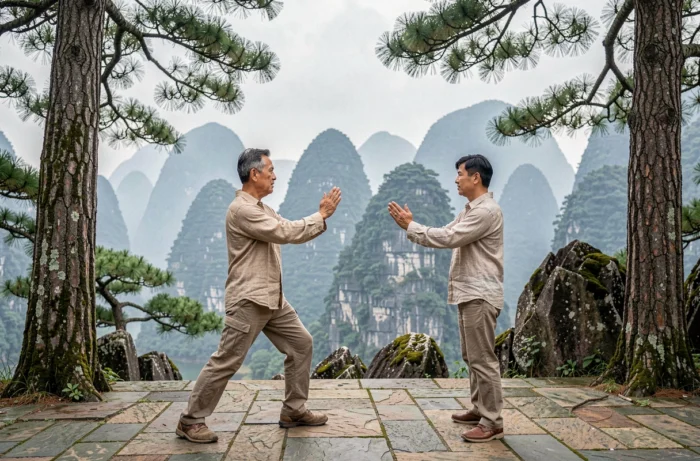
The most notable trend in recent years concerns rural retreats and nature stays away from major metropolises. We’re not talking about a simple guided tourist trek, but immersive stays in villages, farms, or local communities.
In Nepal, mountain lodges offer hiking itineraries where one sleeps with locals, enjoying meals prepared from local produce. In Sri Lanka, some tea plantations open their doors for multi-day stays, far from the usual coastal circuits. In Vietnam, the northern valleys (Sapa, Ha Giang) attract travelers seeking encounters with ethnic minorities in a still-preserved setting.
What this concretely implies
- Infrastructure is often basic: no reliable Wi-Fi, little standard hotel comfort. One either prepares for it or is disappointed.
- Local transport (bus, motorcycle, boat) replaces private transfers. Feedback varies on this point, as some journeys can be exhausting depending on the season.
- Local guides, when they exist, rarely speak fluent English. A few words in the local language can radically change the welcome.
- Monsoon seasons render certain routes impassable for several months. Checking the season before booking avoids unpleasant surprises.
This type of travel requires more preparation than a beach holiday in Thailand, but it grants access to a version of Asia that classic circuits do not show.
Medical tourism in South Korea: a travel motive in its own right
A trip to Asia is rarely associated with a health check or specific treatment. Yet South Korea has welcomed over two million foreign patients in 2025, with double-digit annual growth. It is no longer a niche phenomenon.
Seoul concentrates the majority of this activity, with clinics specializing in comprehensive check-ups, dermatology, dental care, or cosmetic surgery. The sector is gradually diversifying towards traditional Korean medicine and wellness offerings outside the capital.
Why this also concerns non-patient travelers
Even without a medical reason, this infrastructure impacts the stay. The medical districts of Seoul (notably Gangnam) offer wellness experiences accessible to all: medical spas, traditional medicine consultations, specialized pharmacies offering products unavailable in Europe. A stay in Seoul can combine cultural discovery and quality care without one encroaching on the other.
Temples and heritage: stepping off the beaten path in Cambodia and Indonesia
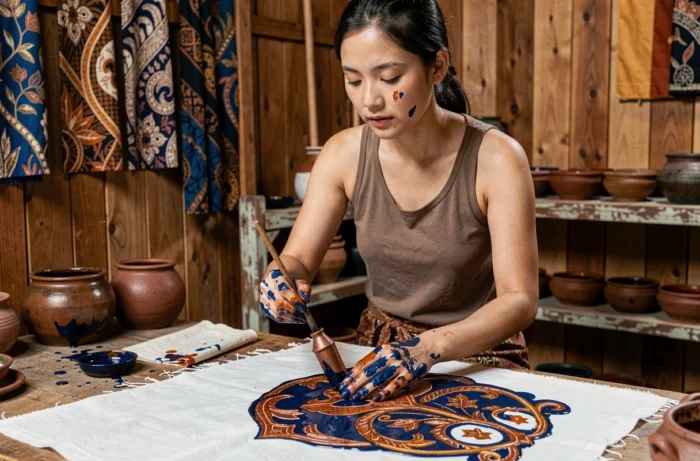
Angkor Wat in Cambodia and Borobudur in Indonesia appear on all lists. We won’t claim otherwise. What changes is the way to approach them.
In Cambodia, the temples furthest from the main Angkor circuit (Beng Mealea, Koh Ker) offer a radically different experience. Fewer visitors, structures still partially engulfed by vegetation, and a silence that is never found at the central site. The journey is longer, the road sometimes bumpy, but the ratio of effort to discovery clearly favors these secondary sites.
In Indonesia, beyond Bali, the island of Java hides Hindu and Buddhist temples that are less photographed but equally remarkable. The Dieng Plateau, for example, combines ancient temples and volcanic landscapes at an altitude that completely changes the atmosphere compared to the southern beaches.
Local gastronomy as an activity in its own right
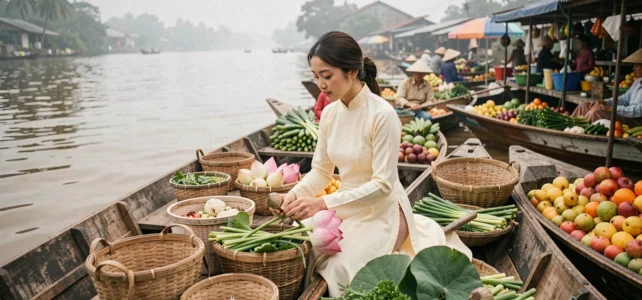
The time a traveler spends eating in Asia is often underestimated. In Thailand, Vietnam, or China, street markets and local cooking classes are as rich an activity as a temple visit. Learning to prepare pho in Hanoi or curry in Chiang Mai is not a side note in the trip; for many visitors, it is the trip itself.
Night markets in Cambodia or dim sum stalls in Hong Kong are places where local culture is transmitted without filter. No need for a guide, no need for a reservation: one sits down, orders with gestures, and discovers flavors that have nothing to do with what one finds in Asian restaurants in Europe.
Traveling in Asia differently does not necessarily require a higher budget or a more complex itinerary. What makes the difference is the willingness to step outside predefined circuits and dedicate time to activities that are not always featured in brochures. Recent constraints related to managing tourist flows, far from being a hindrance, encourage exploration of destinations and experiences that often surpass the most famous sites.