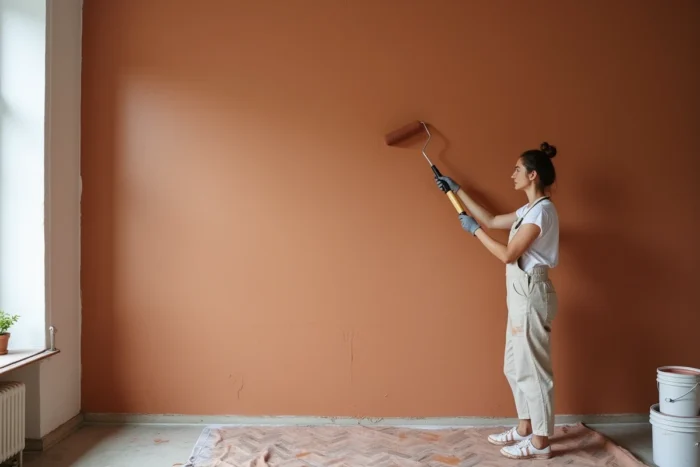
The renovation market in France is transforming under the combined effects of energy constraints and a return to more raw materials. Homeowners starting a project in 2026 face a dual imperative: improve the thermal performance of their home while rethinking the interior layout. This duality alters the order of priorities, budget allocations, and the choice of professionals.
Invisible work before decoration: insulation, ventilation, electricity
The temptation to start with painting or flooring is strong. However, this leads to costly rework when, with walls opened up, one discovers insulation defects or an outdated electrical system.
Field feedback converges on one point: insulation and ventilation determine the durability of finishes. A poorly ventilated room degrades a lime plaster in just a few seasons. An uninsulated wall causes condensation behind wallpaper that was applied too soon.
Updating electrical standards, often postponed, also proves to be structural. An undersized panel limits the possibilities for recessed lighting or home automation, two increasingly demanded features in interior renovations. Addressing humidity, checking network compliance, and installing a ventilation system suitable for the volume of the home are prerequisites that decoration-focused guides rarely address in detail.
Planning these interventions in advance allows for consolidating nuisances (dust, noise, outages) into a single phase of work, rather than reopening a freshly dressed wall. To structure this sequence, the work on deco-asaiss.com offers a useful framework that prioritizes technical steps before aesthetic choices.
Energy renovation and financial aid: what changes the budget
The refocusing of public aid towards comprehensive renovations changes the game for individuals. Current programs favor bundles of work (insulation, heating, ventilation) rather than isolated interventions. This shift encourages rethinking the renovation project as a coherent whole, not as a series of independent small jobs.
Combining an energy audit with a financing plan becomes a preliminary step, even before choosing decorative materials. The audit identifies priority heat losses and directs work towards areas that trigger the most aid. Energy savings certificates (CEE) complement the setup, but their eligibility conditions vary by provider.
The available data does not allow for a typical amount: the cost depends on the existing structure, surface area, and climate zone. However, one point is consensus among industry professionals: a project that integrates thermal performance from the design stage costs less than a decorative renovation followed by energy compliance updates.
Materials and atmospheres in interior renovation: trends for 2026
Recent trends are moving away from smooth, uniform surfaces. Several specialized sources describe a return to visible textures, earthy colors, and less glossy, more matte wood finishes.
- Light and breathable floors are gaining ground over thick carpets, with a preference for natural or semi-natural coverings that facilitate maintenance and improve indoor air quality.
- Terracotta, clay, and sage green shades are becoming dominant in wall paint, aligning with a search for a more organic atmosphere.
- Raw or brushed wood is returning in furniture and interior joinery, often paired with black metal elements to create a subtle contrast.
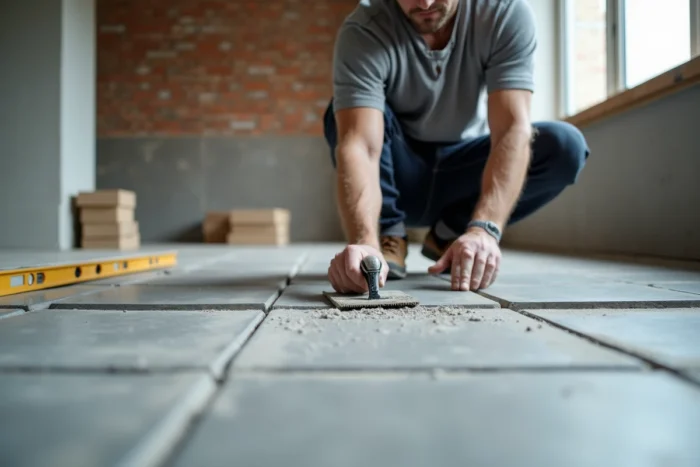
These aesthetic choices are not neutral from a technical standpoint. A cork or natural linoleum floor cannot be laid on a damp slab. The substrate conditions the covering, not the other way around. Checking the residual moisture content of a slab before choosing a flooring material prevents peeling and premature swelling.
Paint and coatings: adapting the product to the wall
On old plaster or stone walls, standard acrylic paints can trap moisture behind the film. Lime-based plasters or mineral paints allow the wall to breathe, extending the life of the finish and limiting rework.
The choice of product also depends on the room. A kitchen or bathroom can better support a washable satin paint, while a living room or bedroom allows for more fragile matte finishes that are visually softer.

Sequencing a renovation project: the order that avoids rework
The chronology of an interior project follows a descending and centripetal logic: start with the ceiling, finish with the floor; address the structural work before the finishes.
- Phase 1: demolition, removal of old coverings, exposing networks (electricity, plumbing, ventilation).
- Phase 2: structural work if necessary, insulation, installation of ducts and pipes, installation of the new electrical panel.
- Phase 3: partitioning, patching and smoothing plasters, installation of interior joinery.
- Phase 4: painting ceilings, then walls, then laying the floor covering, then installing fixed furniture (kitchen, cabinets).
Each phase must dry before the next. Smoothing plasters require several days depending on thickness and room ventilation. Laying a parquet floor on a slab that has not reached its target moisture content causes irreversible deformations.
Coordinating the participants (drywall installer, electrician, painter, flooring installer) remains the most frequent friction point in interior renovation. A shared schedule, even in the form of a simple table, reduces downtime and conflicts of co-activity on the site.
Interior renovation in 2026 is no longer just about choosing a wall color or a kitchen style. The most successful project is the one that first addresses what is not visible, then dresses the result with materials suited to the substrate and the use of each room. This approach requires more preparation in advance, but it avoids rework that burdens the budget and extends the timeline.